Ghanian and Queer: The Twos Two Podcast
By Emily Mitchell
In Ghana, same sex unions are not recognised by law, and are punishable by a prison sentence. The LGBTQIA+ community there not only face discrimination from politicians and law enforcement, but physical assault by the police and general public are commonplace, with few people prosecuted for such crimes. In October 2021, the parliament began to consider an internationally criticised bill which would criminalise homosexuality under family laws, and would also make it illegal to advocate for the rights of the LGBTQIA+ community.
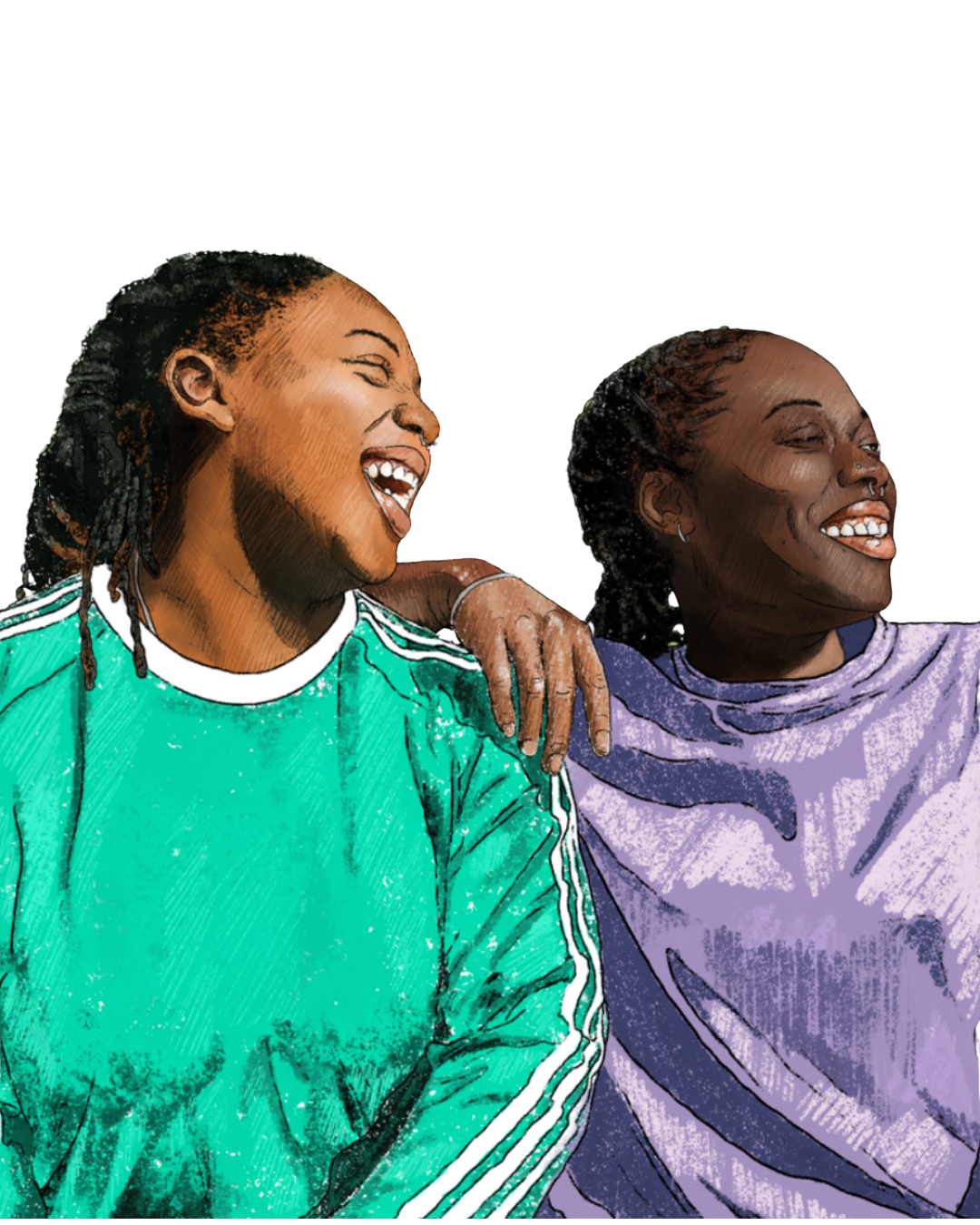
Nana and Rose, co-hosts of the Two Twos podcast, which they describe as “two black lesbians living in London speaking their unapologetic truth whilst creating a safe space for people like themselves and bridging the gap between LGBT+ people and cis-gendered straight people”, talk to us about the queer British Ghanaian experience, from coming out & family tensions to mental health in the black community and LGBT+ rights in Ghana.
The concept of coming out has always been an integral part of the journey to self-realisation for many LGBTQA+ people. To give everyone some context to your journey, if you’re comfortable answering, how and when did you come out?
Rose: I think it’s about coming out to ourselves at first. For me, that was a very gradual process. I knew from when I was in primary school that I liked girls. And it was something that I wasn't really able to admit to myself because I grew up in the Mormon church, and also had come from a very strict African background as well, where being a member of the LGBT+ community isn’t accepted. So fast forward up until I had my daughter, I was like, if I'm going to be teaching her to be herself, then it’s something I need to come to terms with and I have to be myself as well. And that meant being coming out as a lesbian and just living in my truth. So that's what I did.
Nana: I don't think you can come out until you actually come out to yourself. I definitely suppressed my queerness for years, I just couldn't accept it. Everything that I had been taught about being gay was that, it’s wrong. That it's not natural, you know. I just suppressed it, so much that there was no way I could come out. When I went off to uni I became so isolated, and I was lonely with this huge burden. And I wasn't able to suppress it anymore. It got to the point where it was just brimming over the top, and it had nowhere else to go but out. So I had to come to terms with that and I had to accept myself. I think it was a matter of having to do it. It was a matter of life and death kind of thing. I knew I was going to stay in this state of depression if I wasn’t able to be my true self. And, you know, my friends, for the most part, were quite supportive. It's funny, because like lots of people, I was told it’s a phase, by lots of people including my sister. Being told you're going to grow out of that. My friends were like, but, you're gonna marry a man, right? You're just doing this right now? And it’s like... no. Just no. That's not it. Some people couldn't accept it.
My sister outed me because she saw me just being who I was online. She was scared that it would get back to my parents, because of family and friends online. She told my parents and it was just, it wasn't great. It was a hard time. My parents just didn't accept me. When you’re from an African background, it's always hush hush. It’s a situation where you actually want to do the opposite of living your truth; we all want to be loved by family and friends. There are certain times where instead of living your truth, you want to be loved. So you make yourself small in order to be loved by the people around you. And that is not the best thing to do. Because then you end up being somebody totally different to the person that you're supposed to be. And I decided that I didn't want that. So I decided to live my truth and be who I was.
“There are certain times where instead of living your truth, you want to be loved. So you make yourself small in order to be loved by the people around you. And that is not the best thing to do. Because then you end up as somebody totally different than the person you're supposed to be. And I decided that I didn't want that. So I decided to live my truth and be who I was.” - Nana


As British Ghanaians, how do you feel you can make the greatest impact in terms of support for the LGBT+ community back home?
Nana: I think the queer community in Ghana have been forced to hide right now. And they need to feel seen in order to validate themselves. So I feel like the protests that were held here at the Ghana High Commission were so important for them to see that we hear them, and develop a sense of community, even if it's outside of Ghana. That's just for their mental health. In terms of how to physically help them, donations and personally reaching out to them as well, and having conversations to learn about their experience.
Rose: We also signed petitions, but, at the end of the day, countries are run by the government. And it's really, really hard to escape that type of legislation.
Nana: I think something that was really hard to hear was the 21 people that got arrested during an assembly where the activists were discussing human rights treatment of LGBT+ people in the country. They were held for so long, and they didn't really know their rights. They didn’t have lawyers to help them and the people that were supposed to help them were against them. And that's one of the huge problems, that you need to have people in place who actually know the law and who are actually going to help queer people. Because a lot of people in Ghana just don't even get the right people to defend them. Even if you're not among the LGBT+ community, you're just stuck in prison for so long. You don’t even get the right to a hearing, court date or anything, which is insane. A lot of them are in prison for longer than the time they would have been sentenced for.
“That mantra “go where love is”, I think having people around you who are supportive and who care about you and who won't just, you know, sort of say things to agree with you. People who are going to be honest with you as well and transparent with you. That is so important. Because you know it just comes from a place of love.” - Nana
Rose, what drove you to set up your charity, the Black LGBTQIA+ Therapy Fund?
Rose: It was during the first lockdown. I was having a rubbish time coping with the lockdown, my world being turned upside down, like so many others. It was around the time where George Floyd was killed too. We were just seeing so much trauma from every single angle. Racism, homophobia… it was also pride month which for some reason that year was extra homophobic. I felt like you know, if I’m feeling like this somebody else must be too. And I thought to start this charity up to help two people get some therapy and it was meant to be £1000 that I was going to raise. And it ended up being £80,000. And now this is an organisation that's helping lots of people to get therapy. But yeah, it was literally because I just recognised how I was feeling. And I just knew that I wasn't alone.

Do you have any kind of advice for other members of the community on how to take care of yourself when things are difficult in our society? What kind of action do you take to nurture your own mental health?
Rose: Recording the podcast is definitely one thing that helps me right now. When we get in the studio we’re feeling good about ourselves, and when we leave we’re buzzing. We always feel better afterwards. If you know me, I love my skincare routine! After this interview I’m going to have a face mask, I'm going to relax. I love that. Also, people should make sure they have hobbies as well. Hobbies are yours, they are your source of joy. Nobody can take that away from you! When things are not going right in life, that’s something you can turn to. My hobby right now is eating. I’m eating some food and food makes me happy.
Nana: I would say like taking walks. I feel like it's so simple, but it can do you the world of good, especially if the weather’s nice. Taking a break from things is so important because the world moves so quickly. Sometimes you just need a break. So going out for a walk is definitely a good one. And surrounding yourself with love. That mantra “go where love is”, I think having people around you who are supportive and who care about you and who won't just, you know, sort of say things to agree with you. People who are going to be honest with you as well and transparent with you. That is so important. Because you know it just comes from a place of love. I think that is definitely good for your mental health.